Smart City Planning 2026
The discussion stenography: A brief overview of evolving planning issues in U.S. cities
Content
Page 2. The discussion stenography: A brief overview of evolving planning issues in U.S. cities**
Page 5. instead of an introduction - The History of Cities
Page 7. CURRENT URBANIZATION: 95% Of The World’s Population Lives On 10% Of The Land
Page 10. So, we are in 21st century
Page 10. PART 1. Design vs Planning (of course we are still talking about cities)
Page 17. PART 2. SMART CITY OR SUSTAINABLE CITY, OR MAYBE JUST A CITY WHERE NO ONE IS LEFT BEHIND?
Page 17. Smart Cities Generation 1.0
Page 18. Smart Cities Generation 2.0
Page 19. Smart Cities Generation 3.0
Page 20. Smart City like the Human Body
Page 21. Smart Social Infrastructure
Page 23. Inclusive Smart Cities and Urban Informal Economy
Page 24. PART 3. DIGITAL TWINS and SMART CITY KPIs
Page 25. Smart City KPIs
Page 27. Strategic Smart City Goals
Page 28. Culmination - Where to start Smart City?
Page 30. References (used ligature)
____________________________________________________________________________
Discussion notes
A brief overview of evolving planning issues in global cities
Over the past thirty years, the central question about many cities has shifted dramatically. Not long ago, urban leaders in many countries were focused on whether cities could remain livable and competitive—and whether people, especially middle- and higher-income households, would choose to stay. Today, the pressure is often the reverse. With urbanization accelerating worldwide, the more pressing challenge in many major cities is how to remain affordable and inclusive for a broad range of residents.
Many global cities are thriving for affluent households and knowledge workers, yet increasingly unaffordable for lower-wage workers and essential service providers. This changes the core question for modern urban development—and for technology-driven “smart city” initiatives: How can cities use new tools and infrastructure to improve access, safety, and quality of life for everyone, not just the most prosperous?
At the same time, the benefits of growth and technology are unevenly distributed. While leading metropolitan hubs attract investment and talent, many smaller cities—or peripheral districts within large urban regions—struggle with limited fiscal capacity, weaker job markets, and less access to innovation ecosystems.
It is also important to note that “smart city” programs around the world have had mixed results. Some high-profile initiatives have stalled or been restructured due to governance issues, public skepticism, unclear value propositions, financing challenges, or misalignment with local needs. In other cases, new master-planned developments have struggled to serve lower-income residents, build long-term economic vitality, or attract sustained private investment.
Issues in smart cities, technology, and infrastructure
The “smart city” label can make it tempting to focus primarily on technology. But technology is only one piece—and often the easiest piece to discuss. The harder questions are about goals, governance, funding, trust, and social outcomes. Technology vendors may promote solutions based on market priorities, which do not always align with long-term city development.
Below are six major issues to consider.
1) Goals and purpose
What are the goals of a smart city—and specifically, what are the goals of technology deployment? Who defines these goals, through what process, and with what accountability? Are the goals measurable, and are the tradeoffs transparent?
Across cities worldwide, many needs are shared: getting people from home to school and work, improving access to public spaces, healthcare, services, and opportunities. A critical local question is whether there is a credible process for setting priorities—and whether both the process and the goals are widely understood. Who will be well served by smart infrastructure, and who may be left out?
2) Municipal governance and decision-making
How are decisions made at the city level? There is no single “correct” model, but the structure matters. Are responsibilities spread across multiple agencies that must coordinate? What is the role of the public sector versus the private sector in decisions and implementation? How do local decisions interact with regional or national policies that may enable—or constrain—what can be done?
Many cities also face common concerns about surveillance, privacy, and data use. Even when cities adopt similar tools, public acceptance can vary widely depending on governance, oversight, and trust.
3) Funding and long-term sustainability
Where does the funding come from to build smart infrastructure—and is it sustainable over time? Planning must account not only for construction costs, but also for operations, maintenance, upgrades, cybersecurity, staffing, and replacement cycles.
If maintenance funding is uncertain, cities risk building systems that deteriorate quickly. A smart city strategy should map costs and revenue sources over time and identify the human capacity required to operate and repair systems. It should also ask whether the plan will generate long-term economic activity and fiscal revenue to sustain itself.
In addition, goals must align with incentives. For example, if the objective is to reduce congestion and pollution, a strategy cannot focus only on “smart roads”; it must also consider public transit, walking, cycling, land use, and pricing mechanisms.
4) Public expectations and trust
Success ultimately depends on whether residents will use the system and trust it. Trust grows when the public understands what is being built, what data is collected, how it is used, and what protections exist.
Cities also need to ask whether people can realistically participate in the behaviors the system assumes. If a smart mobility system is designed primarily around private cars, what happens to residents who cannot afford cars—or who cannot drive, such as children, older adults, or people with disabilities? Public buy-in increases when goals (safety, access, affordability, resilience) are clear and residents see tangible benefits.
5) Social infrastructure
Social infrastructure includes foundational services and community systems that shape quality of life in a city or neighborhood. Cities differ significantly in culture, institutions, demographics, and daily behavior—so solutions that work in one place may not transfer directly to another.
Common components include:
- Education — schools and lifelong learning systems
- Healthcare — services that protect and improve public health
- Transport and mobility — sidewalks, accessible streets, and sustainable options
- Community support — programs that strengthen social wellbeing (e.g., youth activities)
- Public safety — emergency response and prevention infrastructure
- Arts, culture, traditions — local values, identity, and civic life
6) Human capital and long-term city development
A smart city is ultimately a human project. Who is responsible for achieving outcomes, and how are roles allocated across stakeholders (government, business, civil society, residents)? How will the city develop its workforce and institutions over time?
Planning should consider why the “human element” is often neglected: education quality, skills development, cultural factors, and the lived experience of residents. It should also anticipate future migration patterns—why people choose to stay, leave, or relocate—and what constraints exist locally that other places may not face. The goal is not only to build infrastructure, but to build a city that can adapt, retain talent, and generate the resources needed for long-term sustainability.
The History of Cities
When you look through the prism of time and ask yourself: why cities were formed, you can draw that the main goal was to protect communities (tribes) from external forces. Some cities (fortresses) were destroyed by others. Some cities disappeared due to environmental shifts (excessive deforestation, drying up of water sources, declining land fertility due to overpopulation). Still, some cities have been transformed for hundreds of years, and currently observed on the territory of modern cities has become their historical heritage.
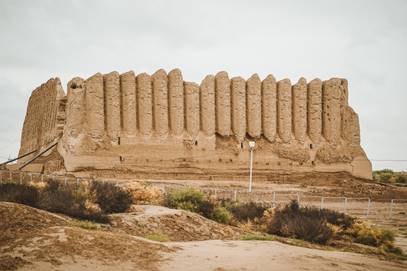
Pic.1 Ruins of the city of Merv (TURKMENISTAN) formerly known as Alexandria (Greek: Ἀλεξάνδρεια), Antiochia in Margiana (Greek: Ἀντιόχεια ἡ ἐν τῇ Μαργιανῇ) and Marw al-Shāhijān, was a major city in Central Asia, on the historical Silk Road, near today's Mary, Turkmenistan. Human settlements on the site of Merv existed from the 3rd millennium BC until the 18th century AD. It changed hands repeatedly throughout history. Under the Achaemenid Empire, it was the centre of the satrapy of Margiana. It was subsequently ruled by the Ancient Macedonians, Parthians, Sasanians, Arabs, Ghaznavids, Seljuqs, Khwarazmians and Timurids among others. (Yakubovskii, A.Yu.; Bosworth, C.E. (2007). Bosworth, Clifford Edmund (ed.). Historic Cities of the Islamic World. Brill. p. 401. ISBN 978-9004153882.)
In National Geography article notes that throughout history, people have been drawn to cities as centers of trade, culture, education, and economic opportunity, but the resulting urban population growth has not always been steady. Indeed, urbanization is a relatively recent phenomenon; until recent years, the vast majority of people lived in rural areas. For instance, more than 90 percent of the global population lived in rural areas in 1800 C.E. The United States Census Bureau indicates that more than 94 percent of the U.S. population lived in rural areas in 1800; by 1900, this number had dropped to 60 percent. [1]
The benefits of dense settlement included reduced transport costs, exchange of ideas, sharing of natural resources, large local markets, and in some cases amenities such as running water and sewerage. Possible costs would include higher rate of crime, higher mortality rates, higher cost of living, worse pollution, traffic and high commuting times. Cities grow when the benefits of proximity between people and firms are higher than the cost. [2]
|
Pic 2. This woodcut shows Nuremberg as a prototype of a flourishing and independent city in the 15th century. (Michel Wolgemut, Wilhelm Pleydenwurff (Text: Hartmann Schedel) - Self-scanned) |
Pic. 3 Nuremberg Castle in autumn 2013 from the southwest (Wikipedia) |
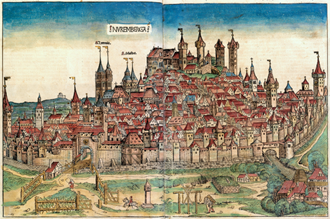
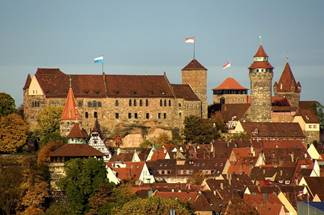
It should be noted that the industrial revolution was one of the main reasons for the formation of modern cities, which began in England in the middle of the eighteenth century and then spread to the United States and other parts of Europe. [3] The Industrial Revolution boosted the growth of factories by creating a demand for workers in urban areas. Over the next century, millions of people in the United States and England moved from farms to cities. Like other parts of the world industrialized, they too became more urbanized. Thanks in part to the Industrial Revolution, the population of London, England, grew from one million people in 1800 to over six million a decade later. Within a few decades, the so-called Second Industrial Revolution accelerated urbanization in the United States, spurring the New York City metropolitan area, New York, to become the largest city in the world by 1950, with a population of 12.5 million" [1].
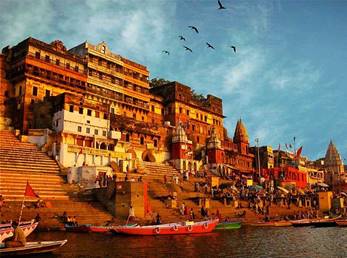
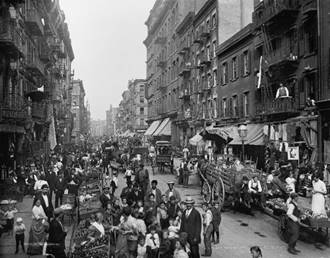
Pic. 4 Left: Mulberry Street in New York City, c. 1900. Image courtesy Library of Congress. Right; Varanasi, Idnia, is one of the oldest continuously inhabited cities in the world (Source: The Better Academy)
CURRENT URBANIZATION:
95% Of The World’s Population Lives On 10% Of The Land
The future of the modern cities Prof. A. Glasmeier (MIT DUSP) in her article “Thinking about Smart Cities” p.5 quotes next “unless economic turmoil and instability stops urban growth in its tracks, over the next 50 years we will live on an increasingly urban planet. According to research reported in the New York Times and supported by the Shell Oil Company and Singapore University’s Urban Lab, by 2050, the United Nations projects that more than 65% of the world’s population will reside in cities. This means that another 18 cities of 10 million or more population will be added to today’s 23 megacities. Of the 41 megacities over 10 million, projected by 2030, 13 will be over 20 million in size” [4]
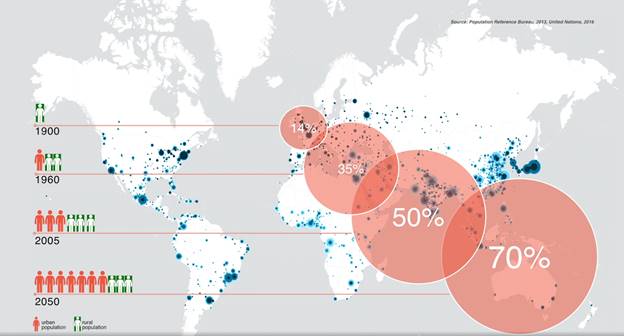
Pic 5. From Population Reference Bureau 2013, UN 2016
In 2009, the European Commission's Joint Research Centre and published in the World Bank’s World Development Report 2009, measured urbanization from the new perspective of Travel Time to 8,500 Major Cities realized that 95% of the world's population is concentrated in just 10% of the world's land. [5] In the report also noticed that the human population is more concentrated than ever before. Europe’s urban sprawl gradually fades as we move eastwards into the steppes of central Asia, soon to re-emerge into the dense networks of people and places in India, China, and Japan. The attraction of Australia’s coasts is dramatically revealed, while North America appears to adopt a grid system not just for its streets and road networks, but for the distribution of the cities themselves. Cities exercise enormous control over national economies - even the global economy. They provide jobs, and access to the best cultural, educational, and health facilities and they act as hubs for communication and transport. Of course, they also cluster massive demands for energy, generate large quantities of waste, and concentrate pollution as well as social hardship. [5]
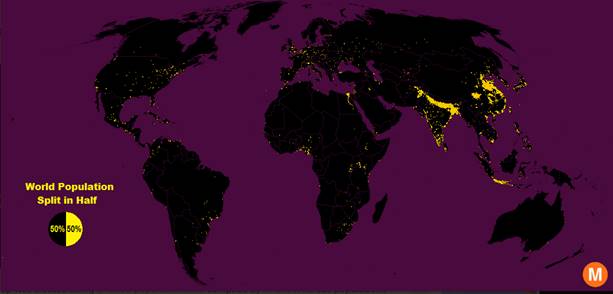
Pic 6. Half The World's Population Lives on 1% of Its Land Using gridded population data published by NASA, which records the global population in each 14-square-km patch of Earth, Galka’s map visualizes how half of us have crammed ourselves into 1 percent of the world’s land space (yellow), and the other half is living in the remaining 99 percent (black). (Max Galka/Metrocosm http://metrocosm.com/world-population-split-in-half-map/ )
During the 20th century, car ownership has increased steadily, parallel with suburban sprawl, highways, and other development for the car. Awareness of ecology in the mid-20th century created the environmental movement, which has addressed the need for sustainable development.
Pic. 7 World Map Pin Flat of City, Global Business and Network Connection Lines in Futuristic Technology Concept in Smart Urban City (Stock Photo Dreamstime.com)
Since the cities of the 20th century were designed for cars, C. Ellis noticed that “the outcome has been a pattern of auto-dependent development (Pucher & Lefevre, 1996; Benfield et al., 1999; Newman & Kenworthy, 1999). In the absence of comprehensive regional planning capable of weaving transportation, land use, and urban design together into authentic urbanism, more balanced alternatives were not pursued. And while automobiles were destined to transform urban life, we have missed opportunities to tame their hostile impact on the public realm. The result has been a seriously unbalanced transportation system, and the fragmented landscape that goes along with it (Barnett, 1995; Kunstler, 1996; Daniels, 1999; Duany et al., 2000)” [6].
As of 1990, Americans made approximately 84% of their total trips in urban areas using the car, with public transit (3%) and walking (9%) trailing far behind (Pucher & Lefevre, 1996, p. 16). European and Canadian cities have done a far better job of providing high-quality transit and walkable urban environments, and this shows up in much higher percentages of transit usage, cycling, and walking.
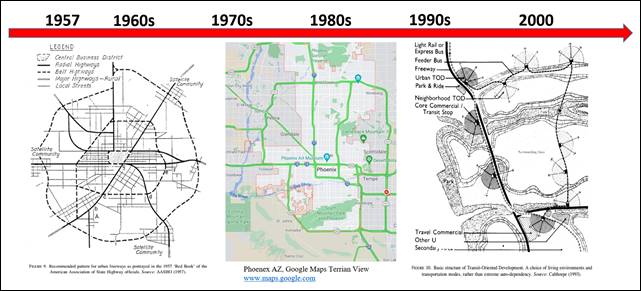
Pic. 8 Left to right: Recommended pattern for urban freeways as portrayed in the 1957 “Red Book” of the AASHO (1957) shows that cities were fragmented by highways and so many important traffic destinations were downtown, including rail and water terminals. Still, many city districts are divided by interstate highways as shown in a Google Map picture of Phoenix AZ, and how after 90s the basic structure of Transit-Oriented Development become a new trend in the US cities.
The negative consequences of fragmented, low-density, auto-dependent land-use patterns. These include congestion, pollution, energy consumption, aesthetic degradation of the urban environment, deaths, and injuries from accidents, loss of open space, environmental damage, and mobility problems for those who cannot drive or afford a car. [6]
So, we are in 21st century
Urban planning became widespread and professionalized. At the turn of the century, the "garden city" model became the icon of a self-contained, comprehensively designed, residential and commercial settlement. Professional urban planners appeared in large numbers, not only to design cities but to provide technical expertise to their administration.
There is a debate about whether technology and instantaneous communications are making cities obsolete, or reinforcing the importance of big cities as centers of the knowledge economy (Castells, M. (2004). Flew, T. (2008) Harford, T. (2008)). Knowledge-based development of cities, globalization of innovation networks, and broadband services are driving forces of a new city planning paradigm towards smart cities that use technology and communication to create more efficient agglomerations in terms of competitiveness, innovation, environment, energy, utilities, governance, and delivery of services to the citizen. Some companies are building brand new master-planned cities from scratch on greenfield sites. [2]
· Gujarat International Finance Tec-City, India
· Nano City, India
· Putrajaya, Malaysia
· Bonifacio Global City, Philippines
· King Abdullah Economic City, Saudi Arabia
· Sejong City, South Korea
· Songdo International Business District, South Korea
· Dubai Waterfront, United Arab Emirates
· Dubai World Central, United Arab Emirates
· Masdar City, United Arab Emirates
PART 1.
Design vs Planning (of course we are still talking about cities)
What comes first, Planning or Design, is always a dilemma in city development. As Jeff Sward says, "planning is Data. Design is creativity," and continue this as the Design is Art, planning is Science [10]. However, it is crucial to find a harmony in between. The problem is that Design gets old fast and depends on the customer's desire. Or how to plan a new city if it is a capital, how design a city if it will be developed in a desert, and avoid any city project that will not come up as a "project of prestige."
The modern (smart) cities are not always some unique cities; they could be inside of capital cities as well. For instance, the capital cities are a particular field of conflict in Design and Planning. Lawrence J. Vale noticed that for capital cities the urbanistic and architectural expressions of nationalism also give the temptation of isolation. [11] and provides an example with like many other instances of single-use zoning that have infected the planet since 1945, designed capital cities have assumed the need for a separate zone for the government [11]. Furthermore, he says that for the modern capital cities, the design decisions orchestrated and implemented at the scale of districts within the city can relate to more significant conflicts, either inter-ethnic ones at the level of the nation-state or international ones that are more about how local identities can be advanced in the face of globalizing forces. [11]
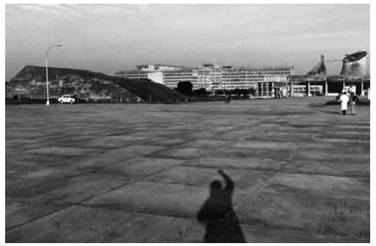
Pic. 9 The vast plaza of Chandigarh, separating monumental buildings, and separating the Capitol Complex from the city. (Photo by LawrenceJ. Vale.)
On the other hand, cities definitely lose their functionality in attractive forms of urban buildings or indulging in monometallism. Moreover, the more expensive the design, the more expensive its maintenance. You could notice that cities grow in the territory, first of all, need planning rather than design. For example, Robert D. Yaro notes that after 1911 New York City grew in size and expanded beyond its borders [11], and New York was also overwhelmed by rapid population growth and congestion and related and recurring epidemics and crime [11]. It is no secret that New York City is still struggling with, even many excellent urban planning and city design improvements is done.
On the other hand, it is a misstep to assume that the urban planners and designers of large metropolitan areas are inaccurately versed in their work. Most likely, the reason is that it is hard for urban design as a discipline to achieve alone the main objectives in practice since other factors are involved in the development process, such as social and economic conditions [12] or, as mentioned earlier, in the US one of the challenges is that they have multiple local governance structures that are very decentralized**. The urban design addresses how people perceive and use their environment. People care about the look, feel, and livability of their communities and urban design tools are a planner’s most effective tools to address this need. [13] However, A.S. Abd Elrahman and M. Asaad in their research argue that developing countries- show a deficiency in urban planning and design strategies. The proof of such poor strategies appears in inadequate urban policies, poor networks, excessive zoning, and lack of accessibility. Such status does not satisfy users and does not achieve their well-being - which is considered a core value for urban design objectives. Hence, the urban design objectives are not always successful in practice [12].
At the same time, A.S. Abd Elrahman and M. Asaad say that these objectives set for the city differ according to several aspects; such as;
- The overall level of economic development
- Laws, and rules that govern resource allocation impact urban development
- Racial and ethnic variations that have a powerful relationship to neighborhood formation
- Cultural norms and traditions which affect practices
- Political authority and power conditions that define the scope of government and urban planning authority
Therefore, aimed urban design objectives are considered a variable is driven by higher levels of urban development and other social, economic, and political factors and not a standard input for all cities. [12]
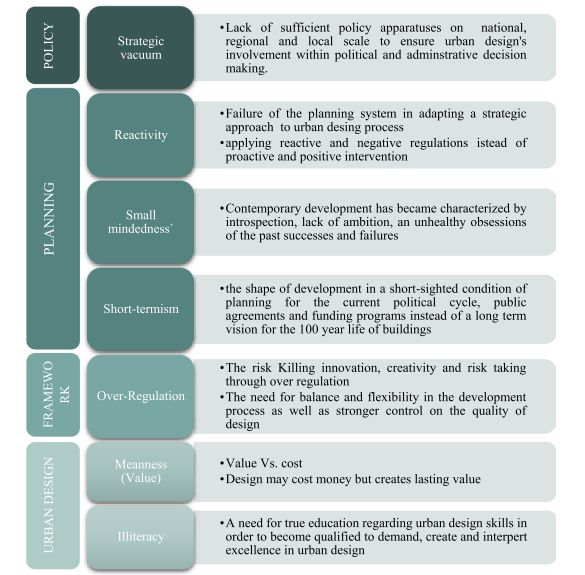
Pic 10. The seven Clamps of Urban Design. The Urban Design process is multi-disciplinary in nature and a key element to defining this process is to understand its relationship with other disciplines. John Rouse defined seven clamps for urban design relating to other disciplines specifying a criticism of how urban design relates to other disciplines, and how in practice such close relations are problematically faced. They can be broadly categorized starting from the urban policy scale, planning, and framework, and all the way to the urban design itself. (Source: “Urban design & urban planning: A critical analysis to the theoretical relationship gap” Ahmed S. Abd Elrahman a,⇑, Moureen Asaad Ain Shams Engineering Journal: www.sciencedirect.com)
In addition, A.S. Abd Elrahman and M. Asaad argues that urban design mostly relates to the public realm just like urban planning does, which somehow makes them share the same designer-client relationship with the city councils representing the public. Some historical evidence shows the fact that the core of theory for urban design has branched off from architecture. In addition, those who aggravated the spark behind the urban design were initially -mostly- architects. Until today, architects all over the world are the urban designers who are addressed in that matter. While in practice, urban design is clearly connected to urban planning, since they form two sides of the same object, which is the physical public realm, sharing the same client – as in the Public- and many concerns in their multidisciplinary nature. Yet urban design theoretical grounding does not relate to urban planning, and so, it is argued that this might be the reason for the current gap in practice, where it is found that the theoretical dreams of urban design are not implemented in practice. [12]
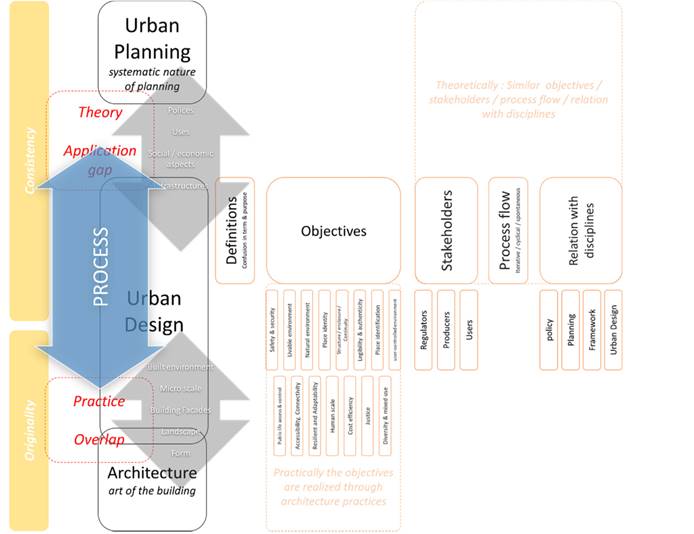
Pic 11. The status of urban design process with respect to Urban Planning & Architecture. (Source: “Urban design & urban planning: A critical analysis to the theoretical relationship gap” Ahmed S. Abd Elrahman a,⇑, Moureen Asaad Ain Shams Engineering Journal: www.sciencedirect.com)
Peter Calthorpe, Urban Design & Planning Principal in HDR, suggests planning the future cities for communities focused on human interaction for solving sprawl and building more thoughtful, more sustainable cities -from climate change to economic vitality and a sense of connectedness.
He argues that the main villain of modern cities is a Sprawl and not a simple sprawl many people think of as low-density development out at the periphery of the metropolitan area. He thinks that sprawl can happen anywhere, at any density. The key attribute is that it isolates people, which segregates people into economic enclaves and land-use enclaves; which separates them from nature, and it doesn't allow the cross-fertilization, the interaction, that makes cities great places and that makes society thrive, especially when we're taking on this massive construction project. [13]
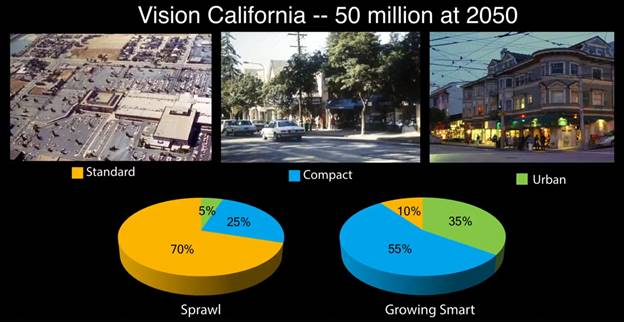
Pic 12. Vision California 2050 (Source: TEDTALK presentation slide of Peter Calthorpe, “7
principles for building better cities” )
In his TED Talk presentation, Peter Calthorpe introduced the model developed for the state of California to reduce carbon emissions. His company did a series of scenarios for how the state could grow where they mixed different development prototypes to carry California through the year 2050. And one was sprawl with the same: shopping malls, subdivisions, office parks. He says the other one was dominated by not everybody moving to the city, but just compact development, what we used to think of as streetcar suburbs, walkable neighborhoods, low-rise, but integrated, mixed-use environments, and the results are astounding promises. They are astounding not just for the scale of the difference of this one shift in city-making habits but also because each one represents a particular interest group, a special interest group that used to advocate for their concerns one at a time. Further, he argues If only a third of the people have cars, why do we give 100 percent of our streets to vehicles? What if we gave 70 percent of the streets to car-free, to everybody else so that the transit could move well for them so that they could walk could bike? [14]
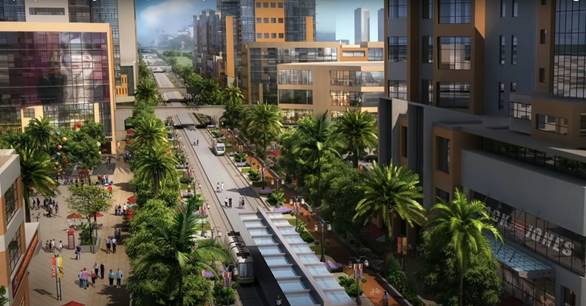
Pic 13. California in 2050 with 70% streets with car-free (Source: TEDTALK presentation slide of Peter Calthorpe, “7
principles for building better cities” )
In turn, Eric Plosky puts forward an important argument that the urban design of new cities should be thought out in terms of flexibility and the possibility of easy and convenient transformation in the future. For example, plan city parks while considering possible natural disasters, such as floods, where the parks can serve as a collection point for floodwaters. Roads and streets of future cities should be designed with a Hazard Mitigation strategy to reduce potential losses from any kind of disasters like fire, storms, or earthquake and evacuate citizens quickly.
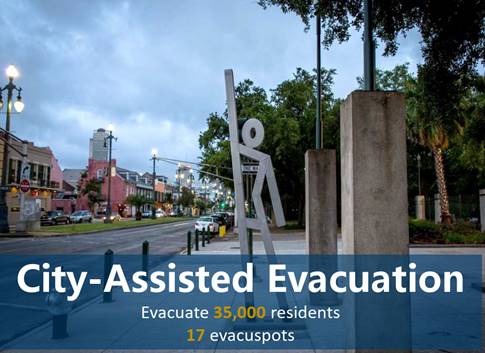
Pic 14. Citi-Assisted Evacuation evacuspots, New Orleans, Louisiana (Source: http://ready.nola.gov)
Herewith would be nice to give an excellent example of how modern US cities are reshaping from the point of view of Design in cooperation with Planning in real practice. Architect Elizabeth Diller in TEDWOMEN 2020, expressed her concern that modern cities become more privatized and commercial real estate dominates the streets that once belonged to the public and sells as a commodity to the highest bidder and demonstrated projects aimed at creating landscapes for the public to enjoy, from the High Line in New York City to Zaryadye Park in Moscow. She said “In our practice, this sometimes means openly sparring with a client to carve out public space, or inventing stealthy, under-the-radar ways of insinuating space for the public into otherwise private building projects. Either way, all democracies need champions. It's our role, as stewards of the urban realm, to will public space into existence and to democratize our progressively privatized cities [14]
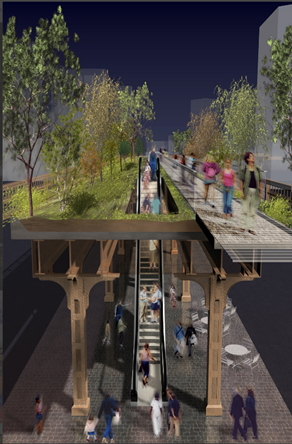
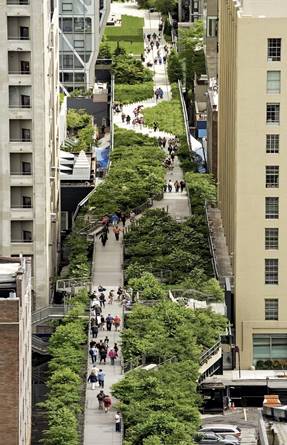
Pic 12. Design of the New York Citi High line The High Line is a 1.45-mile-long (2.33 km) elevated linear park, greenway and rail trail created on a former New York Central Railroad spur on the west side of Manhattan in New York City. A nonprofit organization called Friends of the High Line was formed in October 1999 by Joshua David and Robert Hammond. They advocated its preservation and reuse as a public open space, an elevated park or greenway similar to the Promenade Plantée in Paris. The concept also drew inspiration from Landschaftspark Duisburg-Nord, Germany — a precedent for urban and industrial repurposing in modern landscaping. The organization was initially a small community group advocating the High Line's preservation and transformation when the structure was threatened with demolition during Rudy Giuliani’s second term as mayor. The High Line's design is a collaboration between James Corner Field Operations, Diller Scofidio + Renfro, and Piet Oudolf. On April 10, 2006, Mayor Bloomberg presided over a ceremony to mark the beginning of construction. (Source: Text from Wikipedia, photo from High Line web https://www.thehighline.org/).
PART 2.
SMART CITY OR SUSTAINABLE CITY,
OR MAYBE JUST A CITY WHERE NO ONE IS LEFT BEHIND?
Modern scientific literature formulates theories and concepts of technogenic civilization, in which the interaction between society and technology is interdependent and increasingly stable [17]. Germaine R. Halegoua, in her book “Smart Cities,” notes that scholars use the term “nebulous” to describe the modern smart city due to the many definitions and mission ideas that offer promising but vague descriptions of the innovative urban environment [18] She rightly asks the critical questions of who governs, how and what aspects of the smart city are governable, and how cities can be planned to create communities, manage growth, and efficiently allocate resources and services; do computerized systems and data-driven decision-making really provide municipal governments with ideals of simplicity and order? “At present, the smart city concept and even the term itself are almost inseparable from corporate visions of what digital media, data, and urban space might be.” [18] Prof. A. Glasmeier (MIT DUSP) in her article “Thinking about Smart Cities” p.5 quotes “although we can debate what ‘better urban living’ means, clearly the commercial side of the smart city movement is promising a great deal. Companies like IBM initially claimed that investing in sensing technology would yield safer, cleaner, and more efficient urban areas. Their marketing was directed at an upper middle class, experiencing losses of time and income from urban inefficiencies and urban policymakers desiring to make points for urban innovation. However, more recently, recognizing that their class-based appeals were endangering smart city marketability, companies including IBM and CISCO have “started to alter the discursive emphasis of some of their initiatives from being top-down managerially focused to stressing inclusivity and citizen empowerment” (Kitchin, 2015, 133) [5].
For Smart Cities, we should not look at technological modernization, but rather look at how to enhance the culture and heritage so that more people come to these cities. Greenfield is the more practical approach. But again, you need to look at the problems. For instance, Varanasi, which is a tourist place and should be clean, but it is not. There is a huge problem with the entire waste disposal system. You also need a local industry because people need to have employment. A Smart City is something hen young people don’t want to leave the city for employment. So, you have to ensure that there are enough local opportunities available to keep them engaged (Economic Times of India, 4 December, electronic edition; accessed 7 December 2014) (Prof. A. Glasmeier, 2015) [5].
The urban strategist Boyd Cohen, Ph.D., in his article "The 3 Generations Of Smart Cities," suggests that the concept of "smart city" has undergone three distinct stages in how cities have embraced technology and development, i.e., the transition from technology companies to the driving force of urban governments, and finally citizen initiative. He also thinks that some cities are moving from one phase to another while others have been stuck in one throughout their smart city experiments with given below examples:
Smart Cities Generation 1.0 is characterized by technology providers encouraging the adoption of their solutions to cities that were really not equipped to properly understand the implications of the technology solutions or how they may impact citizen quality of life. It’s like someone who may wait in line for the latest Apple gadget without even knowing what they might use it for. They just have to have it. Smart Cities 1.0 is also the underlying philosophy behind most of the bespoke smart cities projects proposed around the globe from PlanIT in Portugal to Songdo in South Korea. These future city visions have been driven by private sector technology companies such as Living PlanIT and Cisco. In his book Smart Cities, Anthony Townsend presents a thoughtful critique of Smart Cities 1.0, arguing that tech-driven futuristic urban vision were missing out on the key dynamic of how cities interact with their citizens.” [19]
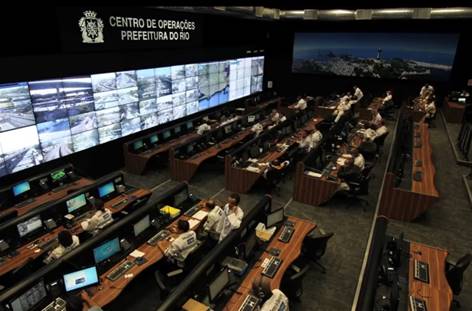
Pic. 13 IBM Built Control Center, Rio De Janeiro (Source: Youtube.Com)
Smart Cities Generation 2.0 This phase has been led by cities, as opposed to technology providers. In this generation, the municipality–led by forward-thinking mayors and city administrators–takes the lead in helping determine what the future of their city is and what the role is for the deployment of smart technologies and other innovations. In this phase, city administrators increasingly focus on technology solutions as enablers to improve quality of life. Perhaps one of the best examples of Smart Cities 2.0 is what Rio’s mayor did when he went to IBM to seek their expertise in creating a sensor network to mitigate the role of landslides in the hillside favelas. [19] The city, with its control center filled with wall size computer monitors, can perhaps use forecasts of threatening weather to send out warnings of storm intensity thus leading to speedier evacuation. What it does not address is the question of why people build housing in such high-risk environments and what it would take to change this behaviour. In this instance, at least, smart city technologies deal with symptoms rather than the disease. [5]
Smart Cities 2.0. Barcelona, for example, has more than 20 smart cities program areas and literally more than 100 active smart cities projects from Wi-Fi in public spaces and public transit to intelligent lighting and the promotion of an electric vehicle charging infrastructure. It has sought to provide global leadership by not just initiating numerous projects, but also supporting the growth of the smart cities industry and city networks through their Smart City Expo and also the City Protocol initiative. Like many leading cities, Barcelona has identified significant opportunities for using technology to facilitate improved quality of life for citizens and visitors. [19] Vienna, for example, is a leading city regularly at the top of the annual smart cities rankings. It continues to be quite active in the 2.0 model and, like Barcelona, also has more than 100 active smart cities projects. But some of those projects have a different feel. For example, in a partnership with the local energy company, Wien Energy, Vienna included citizens as investors in local solar plants as contribution to the city’s 2050 renewable energy objectives.
Smart Cities Generation 3.0 is not just for cities in the developed world, either. It is impossible to discuss Smart Cities 3.0 without discussing another Latin American pioneer, Medellin. Winner of the Urban Land Institute’s Innovative City of the Year Award, Medellin has focused on urban regeneration from the bottom up by engaging citizens from the city’s most vulnerable neighborhoods in transformative projects such as the cable car and electric stairs projects and new technology-enabled schools and libraries. Medellin has recently expanded its commitment to citizen innovators by supporting the develop of an impressive innovation district (Ruta N) to attract and retain entrepreneurial talent.
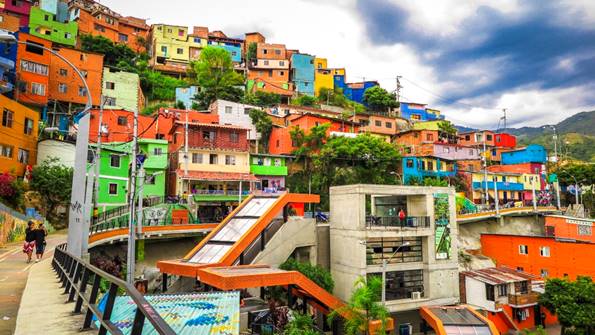
Pic. 14 Medellin suburb, Colombia (Source: Google.Com)
Smart Cities 3.0, as Medellin has demonstrated, appears to be grounded more in issues of equity and social inclusion as well. The emergence of sharing cities is one example where cities are providing the enabling conditions to allow local sharing activities to emerge. While massive, venture capital backed platform companies like Airbnb and Uber are not necessarily consistent with Smart Cities 3.0 visions, many other projects such as Repair Cafes, tool lending libraries for performing repairs to your home, and bike-sharing services have the potential to not only optimize underutilized resources but also raise the quality of life for all residents.
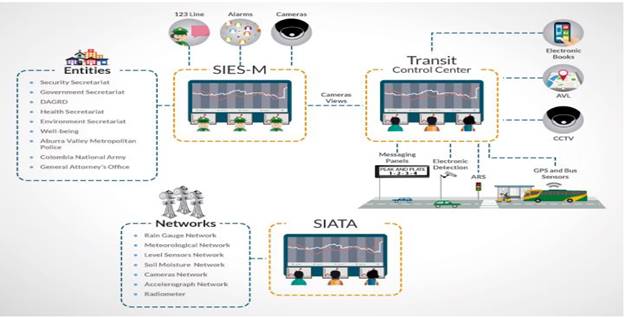
Pic. 15 System Configuration Medellin, Colombia. In the configuration of the smart city solutions implemented by the city of Medellin, there are three main areas in which services are provided: mobility, security, and environment. Each of these is linked to information systems and communication mechanisms. Following are the technical configurations of each smart city service. (Source: IDB International Case Studies, Smart Cities, 2016).
Smart City like the Human Body
The city-state of Singapore is seen as one of the leaders in the race to build fully smart cities, with IoT cameras monitoring the cleanliness of public spaces, crowd density and registered vehicle movements. For example, Dr. Cheong compares the city to a human body in which
- buildings are Muscles,
- parks are Lungs,
- roads are Arteries,
- embedded sensing and computing technologies come in Brain.
- Sensors - a communicating network of gives the city the capacity to adapt to changing conditions and to optimize its systems for better living.
Dr. Cheong shows how powerful this technology can be the development of a new public housing unit in Singapore.
The process begins with a 3D model of Singapore as a whole. Data collected by the sensors allows planners to analyze things like windflow and sunlight patterns, which in turn guides decisions about urban development. Buildings can be sited more appropriately, public spaces made more comfortable, and energy consumption reduced. Precise traffic and transportation data allows planners to better plan the roads and public transit systems.
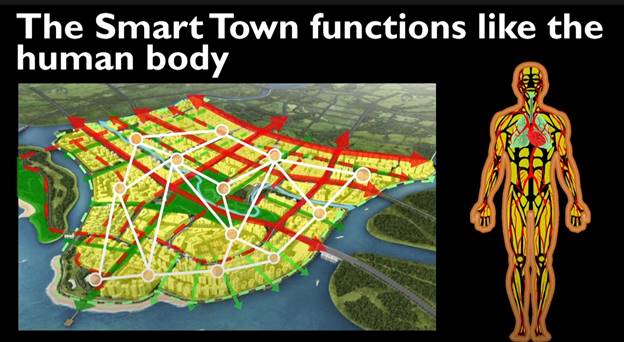
Pic 16. Smart City like the Human Body (Source: Dr. Cheong presentation “Smart City and Nation” TEDx 2015 YouTube video)
On the scale of a single building, sensors placed in various areas allow the building systems to adapt to the occupants’ living patterns, facilitating their daily activities and minimizing energy use. For example, lighting and air conditioning levels can be set to reflect patterns of use, and residents can remotely ensure their family’s safety. Potential maintenance issues can be averted before they even become visible.
The embrace of progressive urban planning techniques is absolutely necessary, as Dr. Cheong highlights with respect to Singapore.
Smart Social Infrastructure
An essential part of the practical implementation of the "Smart City" concept depends on human capital and a good resource base. Human capital is a set of knowledge, skills, and competencies necessary both to remain competitive in the labor market and to be able to quickly adapt to modern changes: it is the intellectual capital that is becoming the most critical factor determining the success of smart city projects. At the same time, to achieve the goal, different cities use their comparative advantages, expressed in geographical location, availability of physical infrastructure, migration flows, etc.
Human capital is a factor in successfully integrating digital technologies into social processes and management. There are various methods for assessing human capital, where one of the key indicators is the human development index (HDI), which is calculated as an integral indicator of living standards, literacy, education, and life expectancy. Certain implementation risks are associated with the population's readiness for such changes, described as asymmetry of expectations.
First, we are talking about further progress in developing artificial intelligence, biometrics, digital profile, and other technologies.
The history of the failure of many projects of the ideology of high modernism of the 20th century, which were aimed at streamlining society through an increase in the volume of information collected and social engineering, could be repeated, bringing it to standards by the ideas of state structures [24, 25]. Consequently, this implies the penetration of the state into private life, which causes an adverse reaction and sabotage from society.
Secondly, the implementation of Smart City projects should be attributed to megaproject management. Megaprojects are characterized by the fact that the final financial and time costs consistently exceed those planned. Hence, since contractors are often unable to anticipate cost increases, the final results will differ significantly from those expected. As Schumacher noted in his book "Small is Beautiful" "In every "developing country" one can find industrial estates set up in rural areas, where high-grade modern equipment is standing idle most of the time because of a lack of organization finance, raw material supplies, transport, marketing facilities, and the like. There are then complaints and recriminations: but they do not alter the fact that a lot of scarce capital resources - normally imports paid from scarce foreign exchange - are virtually wasted [28]."
The implementation of megaprojects is also aimed primarily at adding "political points" to the initiators from among politicians, so formal statements about the project's success may not correspond to actual achievements [27]. So, here again, Schumacher suggests that "the political task: is to encourage other men and women to change society by offering them an example of being economically healthy and socially responsible [28].
Thirdly, the relationship between the benefits of digitalization for urban management and economic development and the city's preservation as a unique social space in which spontaneous order allows for building trust between citizens remains a debatable issue [21, 22]. On the one hand, examples of individual cities (for example, Barcelona and Amsterdam) illustrate how smart city technologies can facilitate communication between residents [23, 24]. On the other hand, most modern urban digitalization projects ignore this point, which can lead to the leveling of social capital in urban communities and/or an increase in the resistance of the traditional city as a self-regulating system.
In this case, if the "smart city" is considered an innovative social product, then I would like to note the words of MIT Prof. Bish Sanyal, the episode from his presentation "Innovation in MIT" at Asbar World Forum 2017 in Riyadh, where he shared the idea that "market flooded with innovations, and nobody knows which innovations really work and as a tool to find a way to evaluate innovations issue needs to look at criteria calls" 3S
-Suitability (how well a product performs)
-Scalability (how quickly a product reaches consumers)
-Sustainability (why some products are used more than others)
find a way that people consumers feel easy to use" [39].
Inclusive Smart Cities and Urban Informal Economy
As Prof. Chen from Harvard School of Design mentioned, there are many types inside of “Topology of Street Vendors” (good sold, service providers, location, premise, status in employment), and at the same time, some types of street vendors can be the part of the tradition and culture, which can be part of national heritage; moreover, “inclusive urban policies require an inclusive vision of cities” where she quoted E. Bhatt “the challenge is to convince the policymakers to promote and encourage hybrid economies in which micro-businesses can co-exist alongside small, medium, and large businesses: in which the street vendors can co-exist alongside the kiosks, retail shops, and large malls” [29].
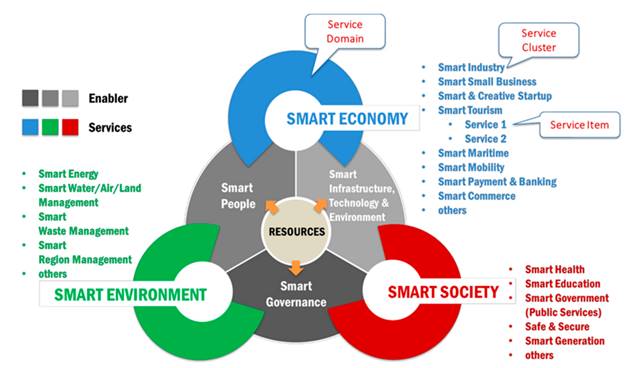
Pic.16 Smart city model and mandala. Kok-Chin et al. published a smart city model showing that the Smart Initiative and the Garuda Smart City Framework for the Development of Smart Cities, Smart and Creative Startups play important roles in the smart economy besides smart small businesses, tourism, maritime, mobility, payment and banking, commerce, and industry (Source: Kok-Chin et al https://www.mdpi.com/2624-6511/3/4/70/htm)
In 2000 book "The Mystery of Capital," de Soto argues that capital arises from its reflection in title deeds, deposits, contracts, and other documents that record an asset's social and economic characteristics. Private property makes people responsible, and assets make liquid, fix trades, and ensures the operation of all market mechanisms from money to production. De Soto believes that the main reason for the flourishing of the shadow economy is bureaucracy. In case of “Smart City” projects “governments should introduce simplified bureaucratic procedures to encourage informal enterprises to register and extend legal property rights for the assets held by informal operators in order to unleash their productive potential and convert their assets into real capital” [30]. So, Inclusive Smart Cities ensure the working poor have access to secure and dignified livelihoods, affordable housing, and basic services such as water/sanitation and electricity. To reduce urban poverty, cities must support informal workers by reshaping urban planning, zoning, regulations, laws and policies to incorporate the working poor. And representatives of the working poor must have a voice in urban planning processes [31].
PART 3.
DIGITAL TWINS and SMART CITY KPIs
Today, a Google search for "digital twin" exceeds 469,000,000 results! It is a virtual representation (or simply "avatar") of a physical system in real-time. The idea is that residents of digital twins exhibit the realities of a physical asset [32].
Raj Thampuran, Managing Director, Technology and Research of Surbana Jurong, shares his expertise that their use is defined by cultures and people as technologies evolve. In a fast-paced, ever-changing digital age, unsurprisingly to some, digital twins are now permeating many industries and aspects of private life. Industry 4.0 concepts use digital twins in manufacturing operations to monitor machine performance and identify problems. There are digital twins of hospitals, medical equipment, and even human organs.
Raj Thampuran gives an example of how one way to think about the value of digital twins is their ability to participate in the entire life cycle of the built environment industry assets through concept, design, development, project management, construction, and managed services. Take, for example, the Virtual Singapore platform. There has been much flattery in the media about Singapore's vision of simulating the pulse of a dynamic city, and the platform is overflowing with geospatial data (SDI) about the city-state. When completed, it intends to provide a digital space and experiential public domain for policy and design decision making, testing hypotheses about urban systems and their interdependence, modeling environmental impacts on the landscape over time, and exploring community participation in and around townships. It is an ambitious digital twin project that has only become successful thanks to organizations and people able to harness its value.
Today, the "Digital Twin" opens up ample opportunities to evaluate the whole project of cities before its construction and operation begin. For example, transportation, flood control, engineering, master planning, and design, and asset management [32].
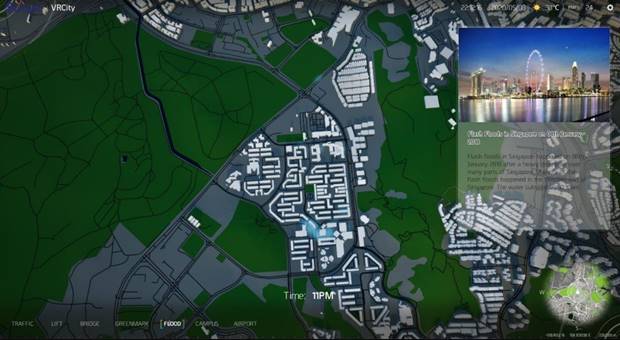
Pic 17. Illustration 1a – Flood simulation analysis – use of stormwater management model integrated into 3D model to identify vulnerable regions prone to flooding. (Source: Surbana Jurong website https://surbanajurong.com/perspective/digital-twins-or-triplets/ )
Also, Raj Thampuran shares in his article that the idea is to model a smart, conscious city that constantly monitors, among other things, environmental conditions, traffic, accidents, emergencies, commuter routes, and pedestrians. The information is then sent to the integrated operations center, and the relevant responses are relayed to the appropriate people or agencies [32].
Smart City KPIs
Cities, states, and metropolitan areas throughout America face unprecedented economic, demographic, fiscal, and environmental challenges that make it imperative for the public and private sectors to rethink the way they do business. These new forces are incredibly diverse, but they share an underlying need for modern, efficient, and reliable infrastructure. Concrete, steel, and fiber-optic cable are the essential building blocks of the economy. Infrastructure enables trade, powers businesses, connects workers to their jobs, creates opportunities for struggling communities, and protects the nation from an increasingly unpredictable natural environment. From private investment in telecommunication systems, broadband networks, freight railroads, energy projects, and pipelines, to public spending on transportation, water, buildings, and parks, infrastructure is the backbone of a healthy economy [33].
Today, Smart cities represent a significant advancement in the planning and development vision of modern societies. Cities use this vision in their efforts to deal with pressing challenges, including demographic change, urbanization, climate change, public safety, and globalization. Next-generation technologies — notably the Internet of Things (IoT) [34][35], Big Data, artificial intelligence (AI), and machine learning (ML) — are among the main vehicles for realizing this vision.
The term ‘smart’ as applied to infrastructures (e.g., smart grid, smart manufacturing) generally refers to the use of networked information processing systems to enhance user interactions, automation, capability, efficiency, or other functional attributes.
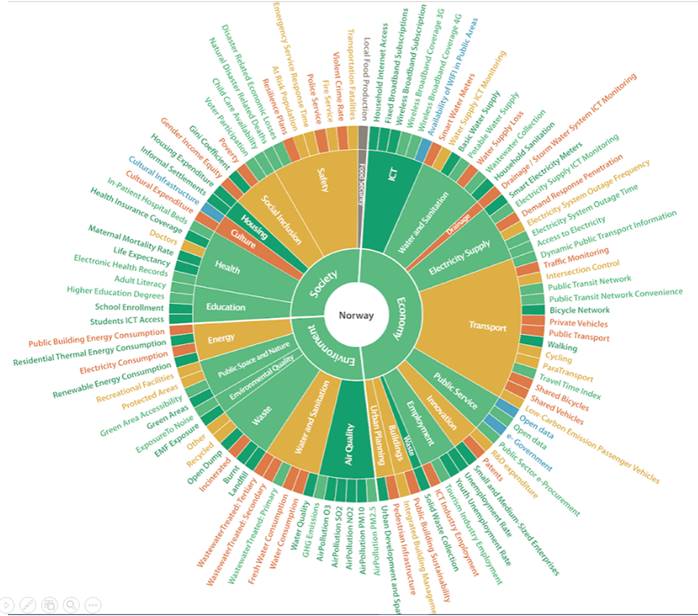
Pic 18. Smart City Key Performance Indicators (Source: Net-Zero Cities By 2030: Smart City Lab, Harvard School of Design)
Strategic Smart City Goals
Reliable and comprehensive measurement methods are essential for effective planning, implementation, and assessment efforts that can lead to achieving strategic goals in any smart infrastructure project. Smart city initiatives focus on the adoption of technologies and digital services to improve quality of life, provide economic benefits, and promote growth. A smart city today should not be defined just by the number of technologies and new infrastructures or services deployed, but by the benefits that accrue across the city or community. Examples include the following.
Enhanced Service Delivery – The current services in the city can be improved according to real citizen identified needs in areas such as traffic management, parking, waste removal, road repairs, and street lighting.
Reduced Operating Costs – Emerging technologies like IoT, Big Data, and artificial intelligence (AI) enable the inclusion of new techniques and methodologies to simplify and facilitate operations and to reduce costs by automating resource-intensive processes.
Increased Commerce and Economic Growth – Better services, increased information access, and enhanced network connectivity provide opportunities for business innovation and job growth.
Improved Environmental Sustainability – Smart city technologies that improve water and waste management, reduce energy usage and emissions, and enhance environmental monitoring and awareness allow cities and communities to be more environmentally sustainable.
Equitable Access to Services and Infrastructures – All of the inhabitants in a city should have access to the services they need to enjoy a good quality of life. For example, becoming a smart city can be a great motivator to start or expand much-needed internet access to a community. In a smart city, all sectors should be able to create and deploy new services and infrastructures and thus respond to the needs for equitable access, even though this can be expected to be different from city to city and from area to area within a city.
Quality of Life – Regardless of geographic location, population, and economic size, smart cities and communities are focusing on improving the lives of their residents and visitors. This core value is a unifying factor in bringing together all stakeholders and citizens on a smart city’s journey. Picture 19 below illustrates this perspective, presenting multiple views in which a city can be studied and characterized [35].
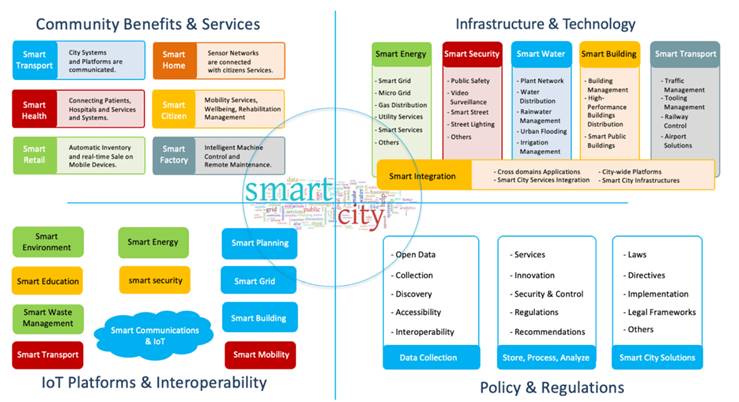
Pic. 19 Illustrates perspective, presenting multiple views in which a city can be studied and characterized (Source: NIST Special Publication 1900-206 Smart Cities and Communities: A Key Performance Indicators Framework, 2024)
Culmination - Where to start Smart City?
In 2015, president Obama declared that “high-speed Internet is a necessity, not a luxury” – like electricity and water [40]. So, any smart city project must start with access to the High-Speed Data and develop the Digital Mapping Services. Now, cellphones, GPS trackers, and other navigation devices offer real-time demand-side data. This is hyper-localized, real-time data at a level of detail that simply did not exist before. MIT Prof Neil Gershenfeld in his book “Design Reality” noticed that we can already see around the corner onto the future where anyone can turn data into things and things into data and can share this information across an internet of bits and atoms [37]. We can add also, Prof. A. Glasmeier (MIT DUSP) in her article “Thinking about Smart Cities” p8 mentions certainly not cutting-edge technology by today’s standards, the innovation described in Zegras's paper highlights how something like a map 'opens up a city’ giving life to spaces that are otherwise obscured. The absence of something as basic as a map of the transit system tells us how far we have to go to make technology available for the purposes of basic navigation. It also tells us that the smart city innovations being developed for high-prosperity cities are light years ahead of the fundamental needs of most of the world's urban populations [4].
At least, Data is already a fundamental part of how transportation and land use professionals plan and build places. These professionals map infrastructure assets, zoning plans, and related socioeconomic data to better understand the supply side of transportation and land use in their communities. [38]. The rapid penetration of connected devices in everyday life provides geospatial movement data at a scale never seen before. Smartphones, vehicle telematics, fitness trackers, credit card transactions, and online map searches offer real-time and highly detailed data points about people’s transportation demands.
Geotagged photo data can illustrate the use of popular public spaces by locals and tourists alike, enabling greater return on investment from public spaces. Data from exercise apps like Fitbit and Runkeeper can help identify recreational hot spots that attract people and those that don’t.
Historically, the public sector took the leading role and invested significant resources into the collection, analysis, and dissemination of data relevant to transportation and land use planning. Google—via its mapping division—now knows more about where people move on a daily basis than their peers in local government who build the roads, rails, and sidewalks that facilitate such travel.
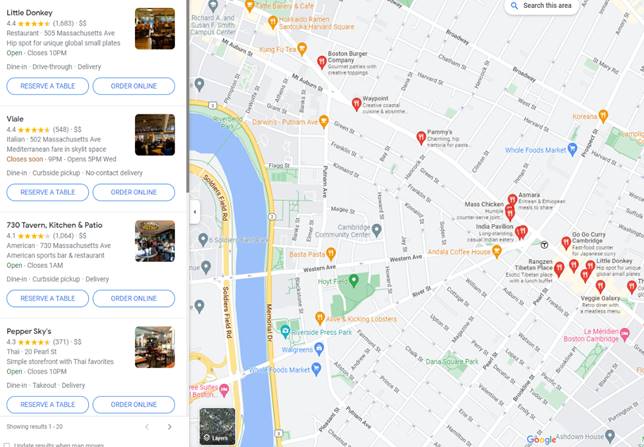
Pic.20 Google Map service for tourism and food around Mass ave., Cambridge 2022
(Source: Google Map)
References.
1. Planning Ideas That Matter: Livability, Territoriality, Governance, and Reflective Practice. (MIT Press, 2012).
2. History of the city - Wikipedia
3. History of the city Industrial Revolution- Wikipedia
4. Editors, History com. n.d. “Industrial Revolution.” HISTORY. October 29, 2019. https://www.history.com/topics/industrial-revolution/industrial-revolution
5. Glasmeier, Amy, and Susan Christopherson. 2015. “Thinking about Smart Cities.” Cambridge Journal of Regions, Economy and Society 8 (1): 3–12. https://doi.org/10.1093/cjres/rsu034
6. “Urbanization: 95% Of The World’s Population Lives On 10% Of The Land.” n.d. ScienceDaily. December 19, 2008. https://www.sciencedaily.com/releases/2008/12/081217192745.htm
7. Cliff Ellis, 2001, “Interstate Highways, Regional Planning and the Reshaping of Metropolitan America” Planning Practice & Research, 25 (pp. 247–269)
8. Castells, M. (ed) (2004). The network society: a cross-cultural perspective. London: Edward Elgar. (ebook)
9. Flew, T. (2008). New media: an introduction, 3rd edn, South Melbourne: Oxford University Press
10. Harford, T. (2008) The Logic of Life. London: Little, Brown.
11. Sward, Jeff “What is the difference between Planning and Designing?”, 2019, web article https://linkedin.com/pulse/what-difference-between-planning-designing-jeff-sward-/
12. Lawrence J. Vale’s chapter, “Capital Architecture and National Identity,” p.46 draws upon some material previously published in Lawrence J. Vale, “The Temptations of Nationalism in Modern Capital Cities,” 2008 in Cities and Sovereignty: Identity Politics and Urban Spaces, edited by Diane E. Davis and Nora Libertun de Duren, and is included here with the permission of Indiana University Press.
13. D. Yaro, Robert “Metropolitanism: How Metropolitan Planning Has Been Shaped by and Reflected in the Plans of the Regional Plan Association” p. 161 Sanyal Bish, Vale LJ, Rosan CD, editors. Planning Ideas That Matter: Livability, Territoriality, Governance, and Reflective Practice. Cambridge, MA, USA: MIT Press; 2012. 432 p.
14. Ahmed S. Abd Elrahman, Moureen Asaad Ain Shams “Urban design & urban planning: A critical analysis to the theoretical relationship gap” p.12, Ain Shams Engineering Journal p. 1163–1173, 2021
15. Elizabeth Diller, “A stealthy reimagining of urban public space” TEDWOMEN2020, https://www.ted.com/talks/elizabeth_diller_a_stealthy_reimagining_of_urban_public_space/transcript
16. Peter Calthorpe, “7 principles for building better cities” TED2017, April 2017 https://www.ted.com/talks/peter_calthorpe_7_principles_for_building_better_cities
17. Mukhametov D.R. Problems and prospects of realization of the concept “Smart city” in Russia (on the example of Moscow). Mir novoi ekonomiki= World of the new economy. 2019;13(3):81-88. (In Russ.). DOI: 10.26794/2220-6469-2019-13-3-81-88
18. Halegoua, Germaine R. “Smart Cities”. Cambridge: The MIT Press, 2020. Print. 1 online resource (248 pages). ISBN: 0-262-35682-1; ISBN: 0-262-35684-8; OCLC: (OCoLC)1130310887; OCLC: (OCoLC-P)1130310887; ISBN: 0-262-53805-9
19. Boyd Cohen, Ph.D, “The 3 Generations Of Smart Cities Inside the development of the technology driven city.” FASTCOM August, 2015 https://www.fastcompany.com/3047795/the-3-generations-of-smart-cities
20. Dr. Cheong Koon Hean, Singapore’s Housing and Development Board CEO, “Smart City and Nation” TEDx 2015 https://www.youtube.com/watch?v=m45SshJqOP4
21. Pentland A. Social physics. How good ideas spread — The Lessons from a New Science. Moscow: AST; 2018. (In Russ.).
22. Jacobs J. The Death and life of great American cities. Moscow: Novoye Izdatelstvo; 2011. (In Russ.).
23. Bakici T., Almirall E., Wareham J. A Smart city initiative: The case of Barcelona. Journal of the Knowledge Economy. 2013;4(2):135–148.
24. Angelidou M. The role of smart city characteristics in the plans of fifteen cities. Journal of Urban
Technology. 2017;24(7):3–28.
25. Urry J. What is the Future? Moscow: Izdatelskii dom «Delo»; 2018. (In Russ.).
26. Mukhametov D. R. Theoretical and methodological foundations of the study of political interactions
between the center and regions: integration of “Center-periphery” and “Zomia” models. Gumanitarnye
nauki. Vestnik Finansovogo universiteta. 2019;9(2):81–85. (In Russ.).
27. Flyvbjerg B. What You Should Know About Megaprojects and Why: An Overview. Project Management
Journal. 2014;45(2):6–19
28. Ernst Friedrich Schumacher, “Small Is Beautiful: A Study of Economics As If People Mattered“, Blond & Briggs (1973–2010), HarperCollins (2010–present) p. 210
29. Prof. M. Chen | Module 1 Lecture Materials and Readings, Urban Economy, Harvard School of Design 2022
30. Informal Economy Debates: Dominant Schools of Thought https://www.wiego.org/sites/default/files/resources/files/WIEGO_IE_Dominant_schools_of_thought.pdf
31. Inclusive Cities and the Urban Informal Economy
32. https://wiego.org/our-work-impact/themes/inclusive-cities-and-urban-informal-economy
33. Raj Thampuran, Managing Director, Technology and Research “Digital Twins or Triplets Surbana”, Jurong, 2020, website https://surbanajurong.com/perspective/digital-twins-or-triplets/
34. Robert Puentes “Why Infrastructure Matters: Rotten Roads, Bum Economy” BROOKINGS: Metropolitan Infrastructure Initiative, Tuesday, January 20, 2015, Brookings Institution: Metropolitan Infrastructure Initiative Series, webpage https://www.brookings.edu/opinions/why-infrastructure-matters-rotten-roads-bum-economy/
35. Griffor E, Greer C, Wollman D, Burns M (2017) Framework for Cyber-Physical Systems,
Volume 1 Overview (National Institute of Standards and Technology, Gaithersburg, MD),
NIST Special Publication (SP) 1500-201. https://doi.org/10.6028/NIST.SP.1500-201
36. Greer C, Burns M, Wollman D, Griffor E (2019) Cyber-Physical Systems and Internet of
Things (National Institute of Standards and Technology, Gaithersburg, MD), NIST Special
Publication (SP) 1900-202. https://doi.org/10.6028/NIST.SP.1900-202
37. Neil Gershenfeld, Alan Gershenfeld, Joel Cutcher-Gershenfeld “Designing Reality How to Survive and Thrive in the Third Digital Revolution “ HARDCOVER / ISBN-13: 9780465093472
38. Adie Tomer and Ranjitha Shivaram “Modernizing government’s approach to transportation and land use data: Challenges and opportunities”, BROOKINGS: Metropolitan Policy Program, 2017, p32, Brookings Institution: Metropolitan Infrastructure Initiative Series https://www.brookings.edu/research/modernizing-approach-to-data/
39. MIT Prof. Bish Sanyal, the episode from his presentation "Innovation in MIT" at Asbar World Forum 2017 in Riyadh https://www.youtube.com/watch?v=WWnoemBJpRM
40. Broadband A 'Necessity,' Obama Says, As He Pushes FCC To Expand Access, 2015, NPR www.npr.org/sections/thetwo-way/2015/01/14/377230778/obama-pushes-fcc-to-expand-broadband-access